Text and pix by Dushiyanthini Kanagasabapathipillai
For the fishermen in Karainagar, the dispute over fishing rights is a continuing issue. While both India and Sri Lanka may prefer to handle their fishermen’s tussles through diplomatic channels, for the fisher folk, it is a person-to-person matter.
For these people, fishing is not merely a livelihood but also a lifestyle. They live and breathe the sea and survive on marine resources. They do not wish to take revenge or get into ugly confrontations with Indian fishermen. For them, their Indian counterparts are the same – fishermen.
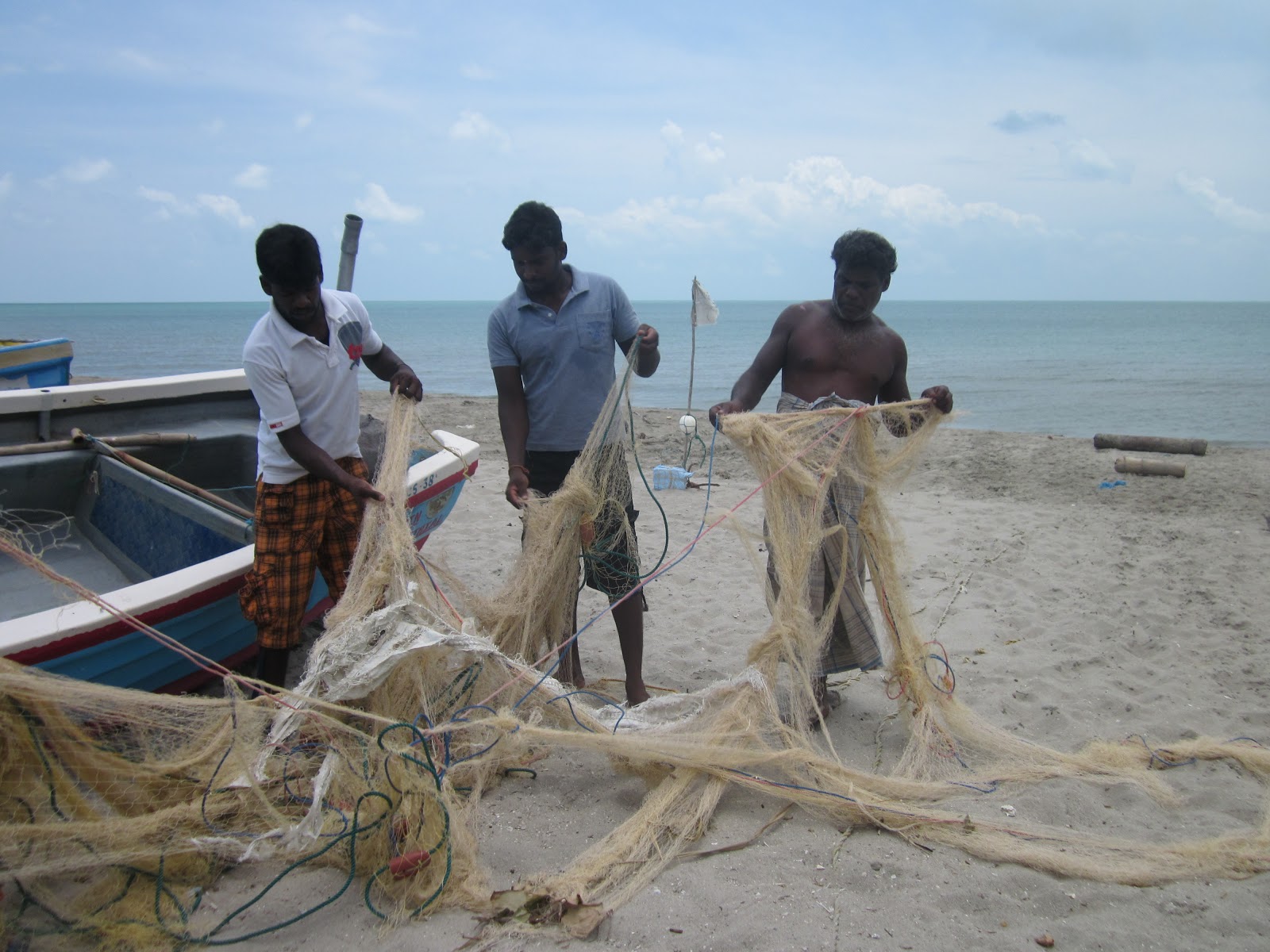
Fishermen
in Kaarainagar untangling damaged fishing net
The issue should be resolved amicably, through the understanding fishermen have with other fishermen, not through complicated channels, they feel.
“We are a community that respects humanity,” says Kanthasamy Rajachandran, President of the Ambaal Fishermen’s Co-operative Society in Karainagar in Jaffna.

Kanthasamy
Rajachandran, President of Ambaal Fishermen’s Co-operative Society in
Kaarainagar explains
 |
| Palmyrah grove |
The fishermen live in a fishing hamlet, Karainagar, and worry about a future when their fishing rights are completely robbed by the Indian fishermen, who have modern fishing equipment as opposed to what they possess.

Small
boats used by Sri Lankan fishermen

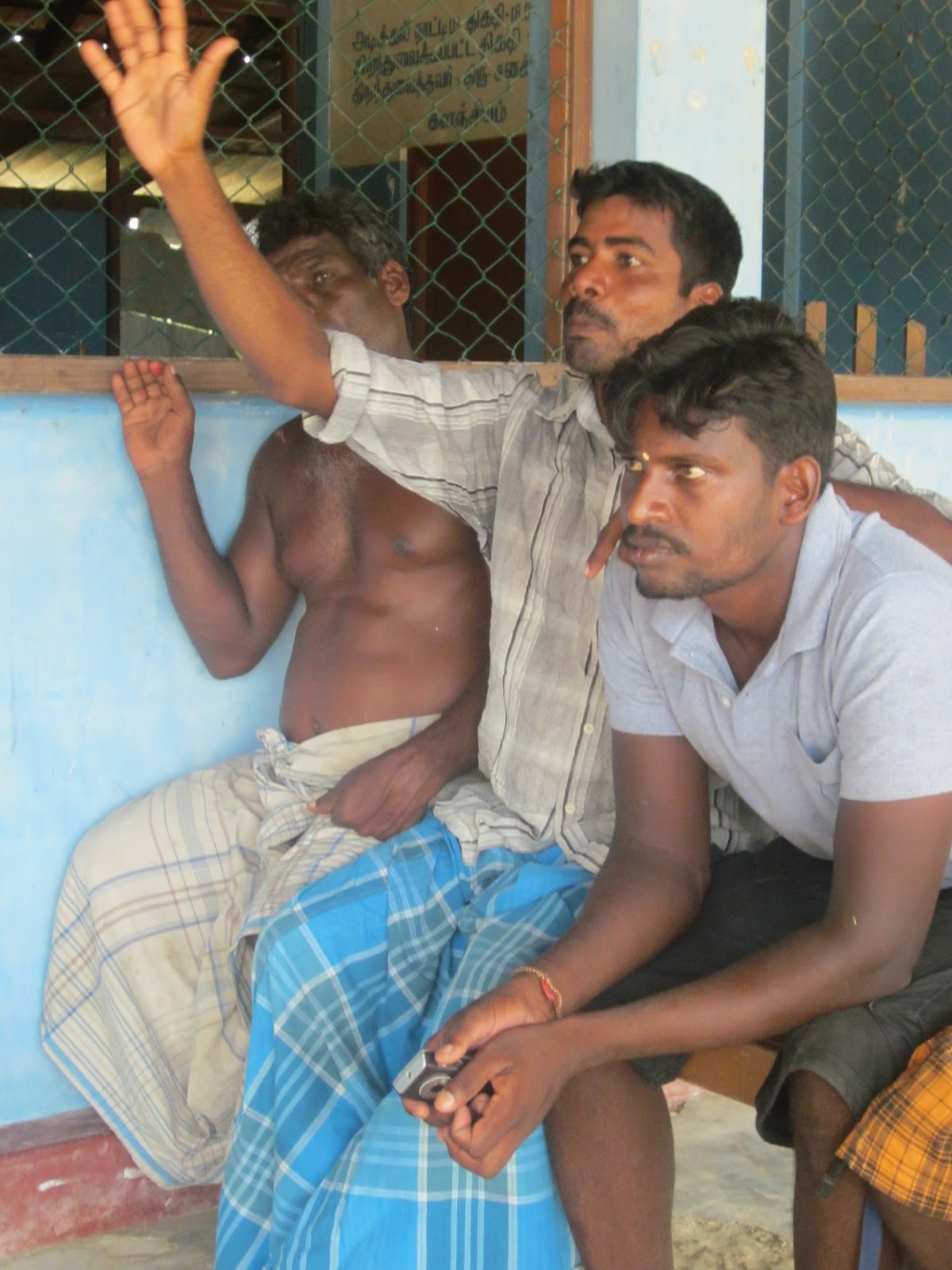
Angry
fishermen in Kaarainagar

Kanthasamy
Rajachandran, President of Ambaal Fishermen’s Co-operative Society in
Kaarainagar in Jaffna showing a recently damaged fishing net
"Indian
fishermen are being unfair" says Mahalingam Lingarajan
“We neither harm them nor their fishing nets. We as Tamil fishermen from Sri Lanka’s North, equally respect our Tamil brethren across the seas. We also don’t want to cause any harm to them or to their nets,” he says.

Velupillai
Krishnaswamy in Kaarainagarshowing one of the damaged fishing net
 Tiny tree shrine to worship
before setting out on sea
Tiny tree shrine to worship
before setting out on sea

The fishermen from Karainagar do not own trawlers or big boats. They also don’t have big fishing nets. What they possess are modest manually cast nets that can bring them minimum catch. Their fishing nets are smaller and fragile, much like their battered sea-dependent economy. They don’t know of deep sea fishing and don’t possess the necessary equipment and certainly do not know any other profession.

Traditional
fishing

Fisherman at sea
“The fishermen have claimed Rs 350,000 as compensation for their damaged nets. The nets are damaged when they get entangled with Indian trawlers and are in unusable condition. Their claims are fair, and we will compensate the Sri Lankan fishermen,” says Yuvani Fernando Arulanantham, a Tamil Nadu based fisher folk activist and President of Niraparaathi, the Alliance for Release of Innocent Fishermen (ARIF).

17
new fishing nets belong to Indian fishermen which got entangled to Sri Lankan
fishermen's boats are cleaned and carefully kept under lock and key in a store
in Kaarainagar
The Sri Lankan fishermen at sea feel threatened by modern technology, and man power – the twin powers that Indian fisher folk enjoy.

New
Nylon nets

Bicycle, fisherman's
mode of transport ashore
“The Indian fishermen are very well-equipped with modern mobile phones and GPRS systems in place. We have a few basic mobile phones, which will work only in specific areas. We have to always bear the loss or damage to fishing nets, and the Indian fishermen come in big numbers – with at least five fishermen on board in each vessel – whereas we have only a maximum of two fishermen in ours,” says Rajaratnam Kamalavasan, who had just brought freshly caught live crabs, which would be exported to Colombo immediately.


 “If Indian
fishermen don’t come to our waters, and damage our fishing nets, we can earn
Rs.200,000/= per day during the season”
says Rajaratnam Kamalavasan
“If Indian
fishermen don’t come to our waters, and damage our fishing nets, we can earn
Rs.200,000/= per day during the season”
says Rajaratnam Kamalavasan Most of the fishermen vow not to make their children fishermen, as they don’t want them also to go through the same life struggle and be dependent on an unpredictable sea. Instead, they want their children to be educated and embrace other professions. “They will have a different future, a much better one,” says Rajaratnam Kamalavasan.

"Indian fishermen should not deprive our livelihood" says Rajaratnam Kamalavasan

Ambaal
Fishermen’s Co-operative Society has 300 fishermen from Kaarainagar


Map of fishing ports belong to Ambaal
Fishermen’s Co-operative Society

Courtesy: Ceylon Today
No comments:
Post a Comment